In today's rapidly evolving digital landscape, businesses can no longer rely on outdated software systems to meet growing customer expectations and market demands. Legacy applications often create operational bottlenecks, increase maintenance costs, and limit innovation. This is why Application Modernization Services have become a top priority for organizations seeking scalability, flexibility, and long term growth.
As enterprises move toward cloud native architectures, AI driven automation, and agile development practices, modernizing existing applications is no longer optional it's a strategic necessity. Whether you're running a legacy enterprise platform or an aging web application, modernization can unlock new opportunities while preserving valuable business logic and data.
Why Legacy Applications Are Holding Businesses Back
Many organizations still depend on software built years ago using technologies that struggle to support modern business requirements. These systems often suffer from:
- Slow performance and poor user experience
- High maintenance and infrastructure costs
- Security vulnerabilities
- Limited scalability
- Difficult integrations with modern tools
- Longer development and deployment cycles
As competition increases, businesses need software systems that can adapt quickly to changing market conditions. Modernization helps organizations overcome these limitations and build a foundation for continuous innovation.
Understanding Application Modernization Services
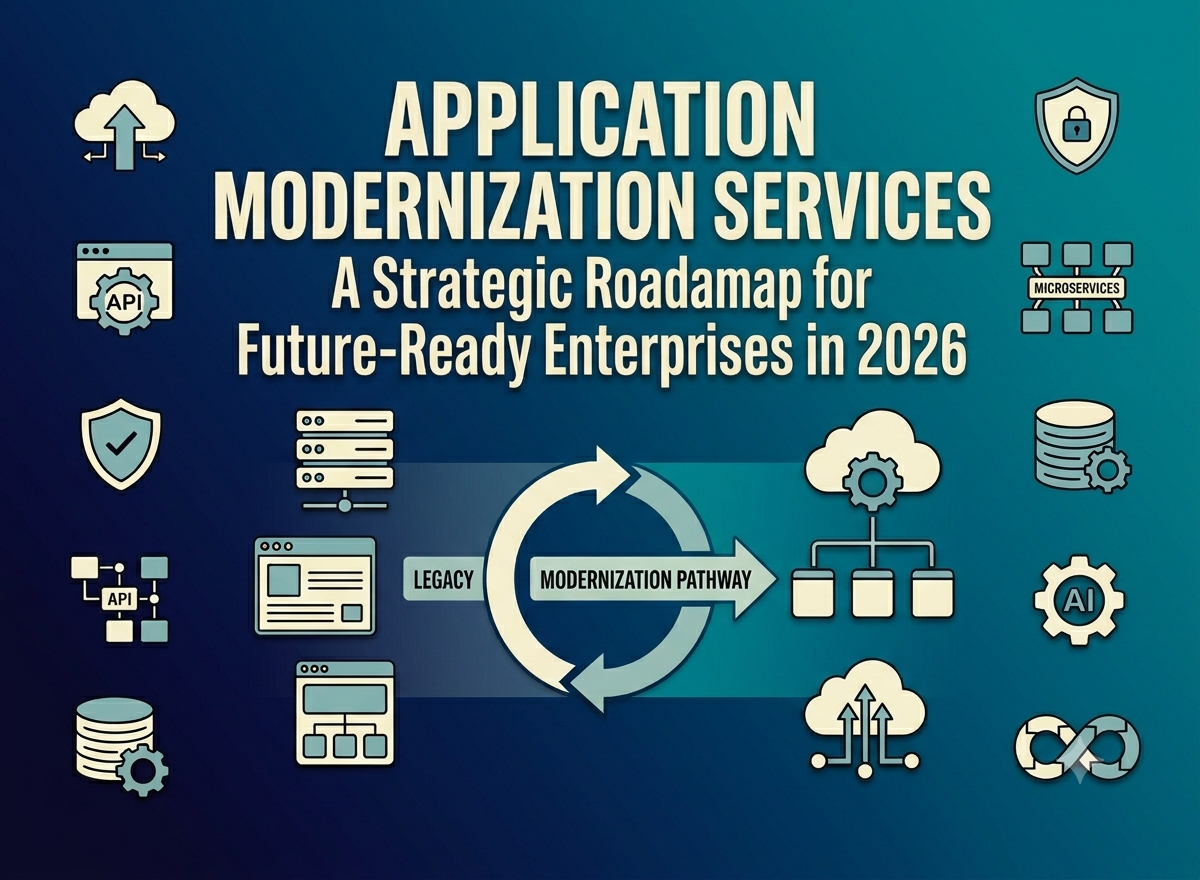
Application modernization refers to the process of upgrading existing software applications, infrastructure, and architecture to align with current technology standards and business goals. Instead of completely replacing systems, organizations modernize critical components to improve performance, security, and maintainability.
Modernization initiatives may include:
- Cloud migration
- Application re-architecture
- API integration
- Database modernization
- User interface enhancements
- DevOps implementation
- Containerization and orchestration
- Microservices adoption
The ultimate objective is to transform legacy software into agile, scalable, and future-ready applications.
The Growing Role of Cloud Native Transformation
Cloud computing continues to reshape how businesses develop and deploy applications. Modernized applications leverage cloud infrastructure to improve performance, reduce operational costs, and enable seamless scalability.
Benefits of cloud native modernization include:
Improved Scalability
Organizations can quickly scale resources based on demand without investing in expensive hardware.
Enhanced Reliability
Cloud platforms provide built-in redundancy, disaster recovery, and high availability.
Faster Innovation
Development teams can release updates and new features more rapidly through automated deployment pipelines.
Cost Optimization
Businesses pay only for the resources they use, improving overall operational efficiency.
Why Ruby on Rails Remains a Strong Modernization Choice
For organizations looking to modernize web applications, ruby on rails consulting services continue to be a popular choice. Ruby on Rails offers a mature ecosystem, rapid development capabilities, and excellent scalability for modern business applications.
Many enterprises choose Rails modernization because it provides:
- Faster development cycles
- Simplified code maintenance
- Strong security features
- Efficient database management
- Easy integration with cloud platforms
- Large developer community support
Organizations with legacy Rails applications can significantly improve performance and maintainability through strategic modernization initiatives.
Microservices: Transforming Monolithic Applications
Traditional monolithic applications often become difficult to manage as they grow. Modernization frequently involves breaking these systems into smaller, independent microservices.
Microservices enable organizations to:
- Deploy features independently
- Improve system reliability
- Accelerate development cycles
- Scale individual components
- Simplify maintenance
By adopting microservices architecture, businesses gain the flexibility needed to respond quickly to changing customer and market demands.
Security as a Core Modernization Priority
Cybersecurity threats continue to evolve, making security a critical component of modernization efforts. Legacy applications often contain outdated security protocols that expose businesses to significant risks.
Modernized applications benefit from:
- Advanced authentication mechanisms
- Automated security monitoring
- Data encryption
- Compliance management
- Secure API integrations
- Vulnerability assessment tools
Investing in modernization helps organizations strengthen their security posture while maintaining regulatory compliance.
How Modernization Supports Digital Transformation
Digital transformation requires technology infrastructure capable of supporting innovation. Application modernization acts as the bridge between legacy systems and modern digital experiences.
Organizations can:
- Deliver better customer experiences
- Integrate emerging technologies
- Improve operational efficiency
- Enable remote collaboration
- Leverage real-time analytics
- Support business growth initiatives
Without modernization, digital transformation efforts often face significant limitations.
The Business Value of Software Development Solutions
Modern enterprises require customized software development solutions that align with their unique business objectives. Application modernization creates opportunities to integrate advanced capabilities such as artificial intelligence, automation, machine learning, and predictive analytics.
Key business benefits include:
Faster Time to Market
Modern development environments enable rapid feature delivery and continuous improvement.
Better Customer Satisfaction
Improved application performance leads to enhanced user experiences and higher engagement.
Reduced Technical Debt
Modern architectures simplify maintenance and future development efforts.
Greater Operational Efficiency
Automation and streamlined workflows reduce manual processes and operational costs.
Emerging Trends Shaping Application Modernization in 2026
Several technology trends are influencing modernization strategies across industries:
AI-Assisted Development
Artificial intelligence is helping developers automate testing, code reviews, and deployment processes.
Containerization
Containers improve portability, consistency, and deployment efficiency across environments.
Edge Computing
Organizations are modernizing applications to support real time processing closer to users.
LowCode Development
Low-code platforms accelerate development and reduce complexity for business applications.
API-First Architectures
Modern applications increasingly rely on APIs to connect services, platforms, and third party solutions.
These trends are helping organizations create more flexible and scalable digital ecosystems.
Selecting the Right Modernization Partner
Successful modernization requires technical expertise, strategic planning, and industry knowledge. Businesses should look for partners with experience in cloud migration, enterprise architecture, DevOps implementation, and modern application frameworks.
An experienced technology partner can assess existing systems, identify modernization opportunities, and create a roadmap that aligns with business goals.
Companies such as W3villa Technologies help organizations modernize legacy applications through strategic development approaches, cloud adoption, and scalable digital transformation initiatives.
Conclusion
Application modernization helps businesses improve performance, scalability, and long-term efficiency while reducing the challenges associated with legacy systems. By adopting modern technologies and strategic modernization approaches, organizations can stay competitive, deliver better user experiences, and support future growth in an increasingly digital world.
If you are planning to modernize your applications and build a future-ready technology ecosystem, contact W3villa Technologies for expert guidance and customized solutions tailored to your business requirements.