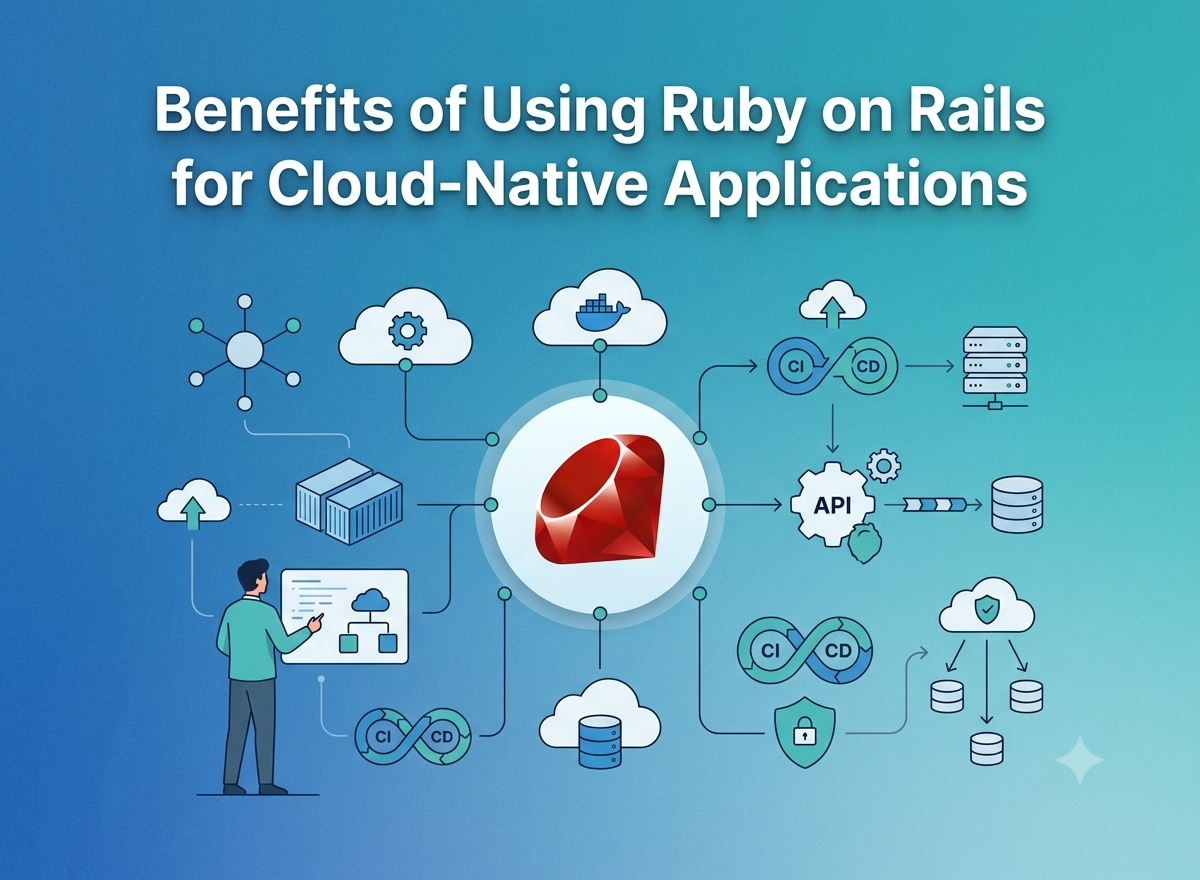
In today's digital landscape, businesses are rapidly shifting toward cloud-native application development to achieve greater scalability, flexibility, and performance. Cloud-native applications are specifically designed to leverage cloud computing environments, enabling organizations to innovate faster and respond efficiently to changing market demands. Among the various frameworks available for modern application development, Ruby on Rails continues to stand out as a powerful choice for building cloud-native applications.
Ruby on Rails has earned a reputation for its simplicity, developer-friendly ecosystem, and ability to accelerate software development. When combined with cloud-native architecture principles, Rails becomes an excellent solution for startups, enterprises, and SaaS companies looking to build reliable and scalable applications. Businesses often leverage Ruby on Rails Development Services to build modern applications that can adapt to changing customer needs and technological advancements.
What Are Cloud-Native Applications?
Cloud-native applications are software systems built specifically for cloud environments. These applications typically utilize:
- Microservices architecture
- Containerization technologies like Docker
- Continuous Integration and Continuous Deployment (CI/CD)
- Dynamic scaling
- Automated infrastructure management
The goal of cloud-native development is to create applications that are resilient, scalable, and capable of adapting to evolving business requirements.
Why Ruby on Rails Remains Relevant
Although many new development frameworks have emerged over the years, Ruby on Rails continues to be widely used by leading technology companies. Organizations choose Rails because it emphasizes developer productivity, code quality, and rapid deployment.
Some globally recognized companies that have used Ruby on Rails include GitHub, Shopify, Airbnb, and Basecamp. Its proven track record demonstrates its capability to support both startups and large-scale enterprise platforms.
Key Benefits of Using Ruby on Rails for Cloud-Native Applications
1. Rapid Development and Faster Time-to-Market
One of the biggest advantages of Ruby on Rails is its convention over configuration approach. Developers spend less time configuring environments and more time building business functionality.
Rails includes built in tools for:
- Database management
- Authentication
- Testing
- Routing
- API development
This streamlined development process allows businesses to launch cloud-native applications much faster than with many alternative frameworks.
For startups and growing businesses, reducing development time can provide a significant competitive advantage.
2. Excellent Support for API Driven Architectures
Modern cloud native applications often rely on APIs to connect services, mobile applications, and third party integrations.
Ruby on Rails offers strong support for building RESTful APIs and modern web services. Developers can easily create secure, scalable APIs that serve as the backbone of cloud-native ecosystems.
Benefits include:
- Simplified API development
- Faster integration with external platforms
- Consistent data exchange
- Improved maintainability
API first development is a crucial component of successful cloud native application design.
3. Scalability for Growing Applications
Scalability is one of the primary requirements for cloud native applications. Ruby on Rails supports horizontal scaling strategies that enable applications to handle increasing user traffic and workloads.
When deployed on cloud platforms such as AWS, Google Cloud, or Microsoft Azure, Rails applications can take advantage of:
- Load balancing
- Auto-scaling
- Distributed databases
- Cloud storage services
This flexibility ensures applications can grow alongside business demands without major architectural changes.
4. Seamless Containerization with Docker
Containerization has become a standard practice in cloud native development. Ruby on Rails works exceptionally well with Docker, allowing development teams to create consistent environments across development, testing, and production.
Advantages include:
- Simplified deployments
- Improved application portability
- Better resource utilization
- Faster environment setup
Docker containers help eliminate configuration inconsistencies and support smoother DevOps workflows.
5. Strong Compatibility with DevOps Practices
Cloud native development heavily relies on DevOps methodologies to automate deployment, testing, and monitoring.
Ruby on Rails integrates seamlessly with DevOps tools and CI/CD pipelines, enabling teams to:
- Automate software releases
- Perform continuous testing
- Reduce deployment risks
- Deliver updates more frequently
This alignment with DevOps principles helps organizations achieve greater operational efficiency and software reliability.
6. Cost Effective Development
Building cloud-native applications requires balancing performance with development costs. Ruby on Rails helps reduce overall project expenses by increasing developer productivity and minimizing development complexity.
Businesses benefit from:
- Faster project completion
- Lower maintenance costs
- Reduced infrastructure overhead
- Smaller development teams
The framework's extensive library ecosystem further reduces the need to build common features from scratch.
7. Large Ecosystem of Gems and Libraries
Ruby on Rails offers access to thousands of open source gems that extend application functionality.
Popular categories include:
- Authentication and security
- Payment gateways
- Background job processing
- API integrations
- Monitoring and analytics
This rich ecosystem accelerates cloud-native development while maintaining code quality and reliability.
8. Enhanced Security Features
Security remains a top priority for cloud native applications. Ruby on Rails includes numerous built in security mechanisms designed to protect applications from common vulnerabilities.
Key security features include:
- Protection against SQL injection
- Cross-Site Scripting (XSS) prevention
- Cross-Site Request Forgery (CSRF) protection
- Secure password management
These features help organizations maintain compliance and protect sensitive customer data.
9. Microservices Friendly Architecture
Although Ruby on Rails is often associated with monolithic applications, modern Rails development supports microservices architectures.
Development teams can:
- Build independent services
- Deploy components separately
- Scale individual services
- Improve system resilience
This flexibility allows businesses to gradually transition from monolithic systems to cloud-native microservices architectures as requirements evolve. Many organizations also rely on Ruby on Rails Consulting Services to plan and implement efficient microservices strategies.
10. Strong Community and Long Term Support
Ruby on Rails has one of the most active and mature developer communities in the software industry.
Benefits of this strong community include:
- Regular framework updates
- Extensive documentation
- Open source contributions
- Community driven innovation
Organizations investing in Rails can feel confident about long-term framework stability and ongoing support.
Best Use Cases for Ruby on Rails Cloud-Native Applications
Ruby on Rails is particularly effective for:
- SaaS platforms
- Enterprise web applications
- E-commerce systems
- Customer relationship management (CRM) solutions
- Project management tools
- Marketplace applications
- FinTech platforms
- Healthcare applications
Its flexibility and scalability make it suitable for both startups and large enterprises.
Future of Ruby on Rails in Cloud Native Development
As cloud technologies continue evolving, Ruby on Rails remains highly relevant due to its adaptability and mature ecosystem. Recent updates have improved performance, developer experience, and cloud deployment capabilities.
Organizations seeking a framework that balances productivity, scalability, and maintainability continue to choose Rails for cloud native projects. Companies like W3villa Technologies help businesses leverage Ruby on Rails to build scalable, secure, and future ready cloud native applications.
With growing adoption of containerization, Kubernetes, microservices, and DevOps automation, Ruby on Rails is well positioned to support modern cloud native application strategies.
Conclusion
Ruby on Rails remains a powerful framework for building cloud native applications, offering scalability, security, rapid development, and seamless cloud integration. Its flexibility and reliability help businesses create high performing applications that support innovation, efficiency, and long term growth.
W3villa Technologies delivers expert Ruby on Rails solutions, helping businesses build scalable, secure, and high performing cloud native applications for long term success.