AI Overview: Best Ruby on Rails Tools
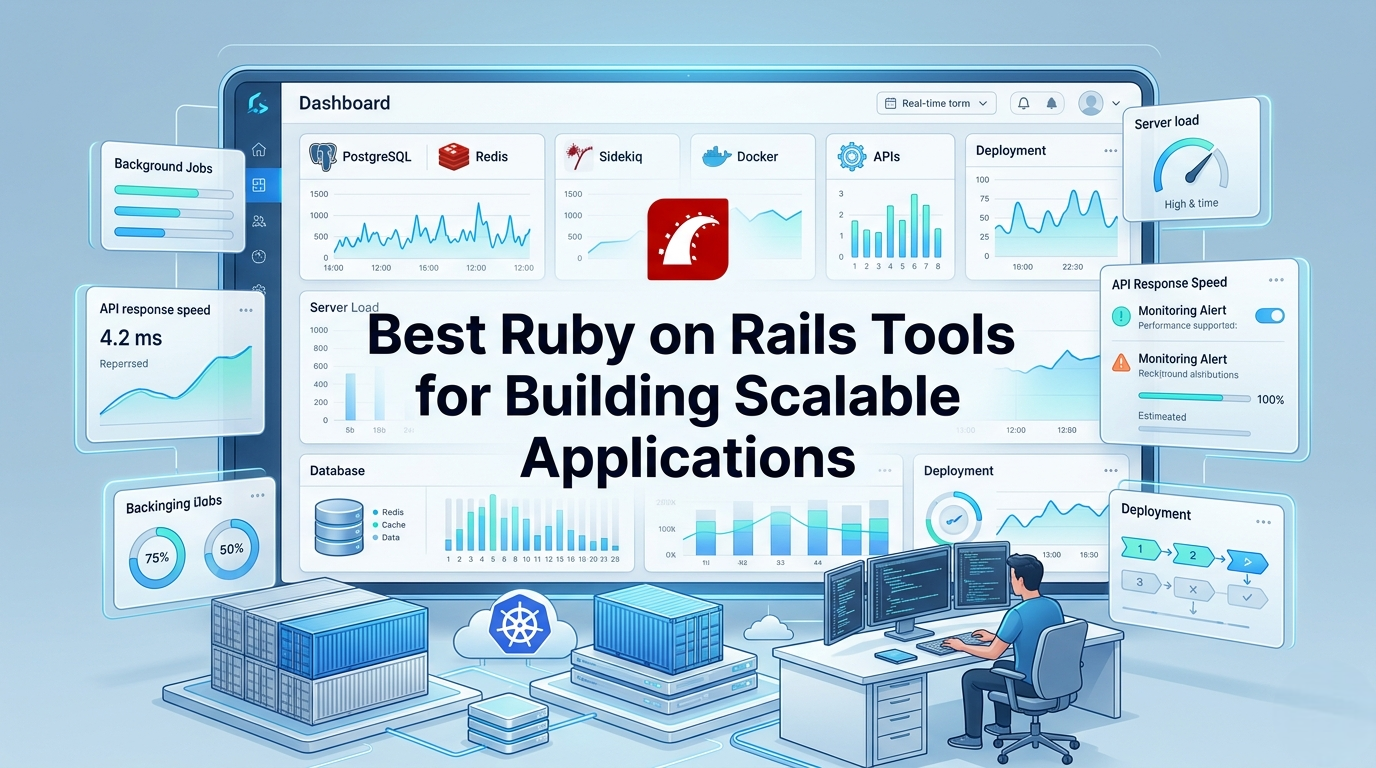
The best tools for scaling Ruby on Rails applications include PostgreSQL for database performance, Sidekiq for background processing, Redis for caching, and Docker for deployment. These tools help improve speed, handle high traffic, and ensure system stability. In short, the right combination of tools enables developers to build efficient, scalable, and high performing Rails applications.
Introduction:
Building Scalable Rails Applications Starts with the Right Tools
Scalability is one of the biggest challenges in modern web development. As applications grow, issues like slow response times, increasing server load, and complex data handling begin to appear. While Ruby on Rails offers a strong foundation, real scalability depends on the tools used alongside it. Many applications fail to perform under load not because of poor logic, but due to weak tooling decisions. At W3villa Technologies, we focus on selecting and implementing practical, performance driven solutions that ensure applications remain stable, efficient, and scalable as systems continue to grow.
Database Load Management and Query Efficiency
As traffic increases, the database becomes the most sensitive part of the system. Poor query handling and lack of indexing can quickly slow down applications. Tools that improve database behavior:
- PostgreSQL - A powerful relational database designed for handling large datasets and complex queries. It supports indexing, parallel execution, and flexible data types.
- PgHero - Helps analyze slow queries and detect inefficiencies in database performance.
- Bullet - Identifies unnecessary queries during development and prevents performance issues before deployment.
These tools help maintain stable database performance even when the application handles large volumes of data.
Handling Heavy Tasks Outside the Request Cycle
Applications often perform operations that take time, such as sending emails or processing files. Running these tasks during user requests can slow down the system.
Tools used for background processing:
- Sidekiq - Processes jobs in the background using Redis, allowing multiple tasks to run efficiently without blocking user requests.
- Active Job - Provides a standard interface for managing background jobs within Rails.
By separating heavy operations from the main request flow, applications remain responsive even under load.
Reducing Repeated Work with Caching Layers
Repeated database queries and computations can increase system load. Caching helps avoid unnecessary processing by storing frequently accessed data.
Tools for caching:
- Redis - An in memory store that allows extremely fast data retrieval.
- Rails Cache Store - Built in caching system that integrates easily with Rails applications.
Caching helps minimize repeated operations and keeps response times consistent as traffic grows.
Structuring API Responses for High Traffic Systems
As applications scale, APIs handle a large number of requests. Poorly structured responses can increase latency and server load.
Tools used for API handling:
- Jbuilder - Helps create structured JSON responses efficiently.
- Rack Mini Profiler - Tracks request performance and identifies slow endpoints.
Efficient API design becomes essential when dealing with large scale systems, especially in projects involving complex API Development workflows.
Managing Deployments Across Environments
Scaling an application requires consistency across development, testing, and production environments. Manual deployment processes often introduce errors.
Tools for deployment management:
- Docker - Provides containerized environments, ensuring consistency across systems.
- Kubernetes - Handles orchestration and scaling of containers in production.
- Capistrano - Automates deployment tasks and reduces downtime during releases.
These tools ensure that applications remain stable during updates and scaling operations.
Observing System Behavior in Real Time
As systems grow, it becomes difficult to identify performance issues without proper monitoring.
Tools for monitoring:
- New Relic - Tracks application performance, server health, and bottlenecks in real time.
- Skylight - Provides detailed insights into request performance and system behavior.
Monitoring tools allow developers to identify and resolve issues before they affect users.
Securing Applications as They Scale
Security becomes more critical as applications grow and handle more user data. Without proper tools, vulnerabilities can go unnoticed.
Tools for security:
- Brakeman - Scans applications for security vulnerabilities and potential risks.
- Devise - Handles authentication and user management securely within Rails.
These tools help maintain application integrity while scaling.
Aligning Tool Selection with Application Needs
Selecting tools without understanding system requirements can lead to unnecessary complexity.
Important considerations:
- Nature of data and query complexity
- Frequency of background tasks
- Volume of API requests
- Deployment frequency and scaling needs
Choosing tools based on real system behavior ensures better performance and stability.
Execution Approach with Experienced Teams
Even the best tools require proper implementation. Poor integration can reduce their effectiveness.
Working with a skilled ruby on rails development team helps ensure:
- Correct integration of tools
- Efficient system architecture
- Smooth handling of scaling challenges
Teams offering ror development bring practical experience in managing large scale applications, ensuring long term reliability.
Conclusion: Building Scalable Systems with the Right Tooling
Scalable applications are built through thoughtful selection of tools and proper implementation. Each layer from database handling to deployment and monitoring contributes to how well the system performs under increasing demand.
By choosing the right tools and using them effectively, developers can maintain performance, stability, and reliability as applications grow.
At W3villa Technologies, we help businesses build scalable Rails applications with the right technical approach. If you're planning to optimize or scale your system, contact us for expert support and development guidance.
Frequently Asked Questions (FAQs)
1. Which tools are commonly used for scalable Rails applications?
PostgreSQL, Sidekiq, Redis, and monitoring tools are widely used to handle scaling effectively.
2. Why is background processing important?
It allows time consuming tasks to run separately, keeping the application fast for users.
3. How does caching help in scaling?
Caching reduces repeated database queries and improves response time.
4. What role does monitoring play?
Monitoring helps track performance and identify issues early.
5. Do all projects require these tools?
No, tool selection depends on the size and complexity of the application.